
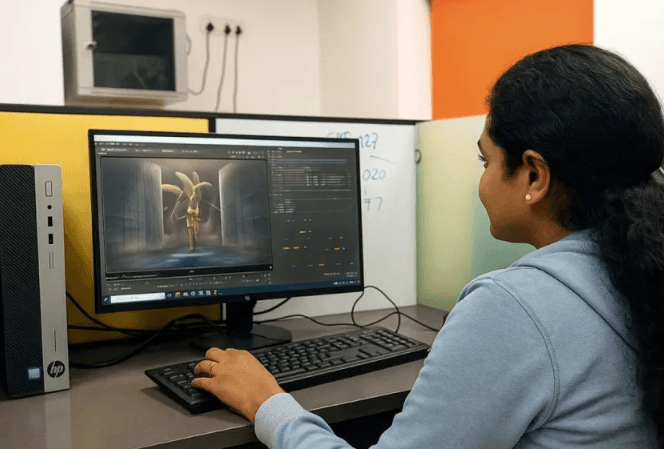
Visual effects (VFX) have become a specialized field within the broader media and entertainment industry, requiring a combination of technical precision, creative thinking, and deep understanding of production workflows. As projects grow more complex and quality expectations increase, studios are looking for professionals who can go beyond basic execution and contribute at an advanced level.
The global visual effects segment generated $4,771.8 million in revenue in 2023 and is projected to reach $11,924.8 million by 2030, reflecting strong demand across film, streaming, and digital production. This steady growth highlights the importance of advanced training for professionals aiming to build long-term careers in VFX.
For students exploring higher-level learning paths, reviewing options such as the advanced VFX institute India can provide an initial direction before evaluating what defines advanced training.
This guide explains how advanced VFX institutes in India support career growth and what students should look for when choosing the right program.
Understanding the Need for Advanced VFX Training
Basic VFX training introduces students to tools and concepts, but it often does not prepare them for the complexity of real production environments. Advanced training focuses on refining skills, improving output quality, and enabling students to handle multi-stage workflows.
At this level, students are expected to take ownership of projects, manage revisions, and deliver consistent results. They must understand how different components of a project interact and how to maintain quality across all stages of production.
Advanced institutes structure their programs to reflect these expectations, ensuring that students are prepared for professional roles rather than just academic completion.
What Defines an Advanced VFX Institute
An advanced VFX institute focuses on depth rather than breadth. Instead of covering multiple topics superficially, it emphasizes mastering specific skills and applying them effectively.
Key characteristics include:
- Specialized curriculum that focuses on advanced techniques and workflows
- Production-oriented training that mirrors real-world environments
- High-quality project work that emphasizes refinement and consistency
- Strong mentorship to guide students through complex tasks
These elements help students transition from basic understanding to professional-level expertise.
Core Learning Areas in Advanced VFX Programs
Advanced VFX programs are designed to build both technical mastery and creative depth. Students work on complex tasks that require precision and attention to detail.
Advanced Technical Training
Students gain expertise in areas such as:
- Complex compositing techniques
- Simulation of natural elements like fire, smoke, and water
- Lighting and rendering for realistic integration
- Advanced rigging and asset management
This level of training enables students to handle demanding production tasks.
Production Pipeline Understanding
Understanding production pipelines is essential for working in VFX. Students learn how different stages connect and how errors in one stage can affect the entire project.
They develop skills in:
- Asset creation and organization
- Workflow coordination
- Integration of multiple elements
This knowledge improves efficiency and collaboration.
Project-Based Learning
Advanced institutes emphasize large-scale projects that require planning, execution, and refinement.
Students:
- Work on multi-stage assignments
- Handle feedback and revisions
- Solve complex production challenges
This approach builds both technical and problem-solving skills.
Portfolio Development
At the advanced level, portfolio quality becomes critical. Students are encouraged to focus on fewer projects with higher quality.
They work on:
- Polished final outputs
- Specialized project work
- Professional presentation
A strong portfolio significantly improves career opportunities.
Role of Industry Exposure in Career Growth
Industry exposure plays a key role in advanced training. It allows students to understand how their skills apply in real-world scenarios and helps them build professional networks.
Advanced institutes provide:
- Internship opportunities with production studios
- Live project work involving real client requirements
- Workshops and masterclasses conducted by industry professionals
- Networking opportunities with experts
These experiences help students transition smoothly into professional roles.
Infrastructure and Technical Environment
Advanced VFX training requires access to high-performance systems and professional tools. Without proper infrastructure, students may not be able to handle complex projects effectively.
Students should evaluate whether the institute provides:
- High-performance computer systems
- Licensed software access
- Dedicated VFX workstations
- Reliable rendering infrastructure
A strong technical environment supports better learning outcomes.
Industry Demand for Advanced VFX Skills
As content production grows, the demand for advanced VFX skills continues to increase. Studios are looking for professionals who can contribute immediately and handle complex workflows.
The global animation market, which includes VFX applications, is projected to reach $51.03 billion by 2030, driven by demand across film, gaming, and digital media. This growth is creating opportunities for professionals with advanced capabilities.
In India, the expansion of digital platforms and gaming is further increasing demand for skilled VFX artists, making advanced training more valuable.
See also: How to Create a Crypto Investment Plan
How to Choose the Right Advanced VFX Institute
Selecting the right institute requires careful evaluation of multiple factors.
Students should consider:
- Skill level alignment: Does the program match your current expertise?
- Specialization options: Are there focused learning paths?
- Project depth: Are students working on complex assignments?
- Mentorship quality: Is there strong guidance and feedback?
These factors help determine whether the institute supports meaningful growth.
Common Mistakes When Choosing Advanced Institutes
Students often face challenges when transitioning to advanced training.
Avoid:
- Enrolling without a strong foundation
- Choosing general courses instead of specialized ones
- Ignoring project quality
- Not evaluating curriculum depth
These mistakes can limit skill development.
Strategies for Long-Term Career Growth
Students can improve their career prospects by focusing on continuous improvement. Effective strategies include:
- Building independent projects beyond coursework
- Seeking regular feedback
- Learning additional tools and techniques
- Staying updated with industry trends
Consistent effort helps students remain competitive.
Balancing Creativity and Technical Expertise
Advanced VFX requires a balance between creative thinking and technical execution. Students must be able to visualize effects and implement them accurately.
Developing:
- Creative problem-solving skills
- Technical proficiency
- Attention to detail
- Collaboration abilities
helps students succeed in professional environments.
Final Thoughts
Advanced VFX institutes in India play a crucial role in helping students transition from basic training to professional-level expertise. By focusing on specialization, project quality, and industry exposure, these institutes prepare students for long-term career growth.
Students who choose the right programs and commit to continuous learning can build strong portfolios, develop advanced skills, and succeed in a competitive and evolving industry.
